
Appraisal Services
Areas of Appraisal
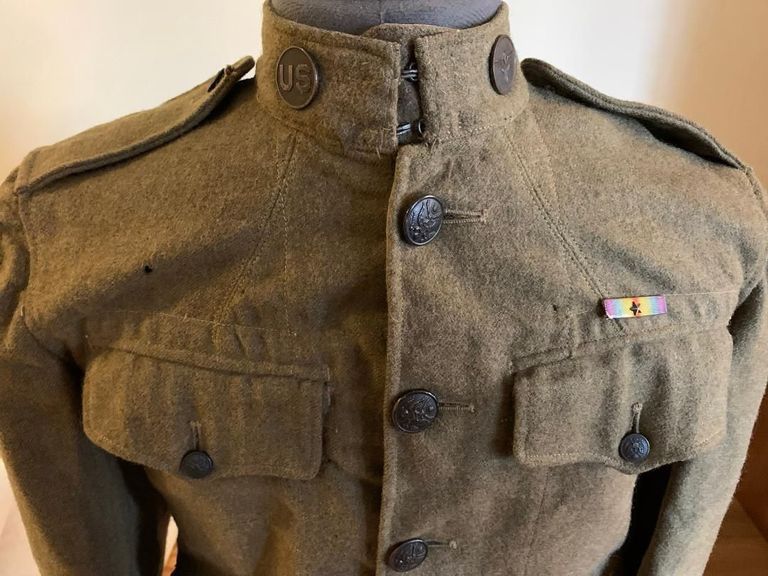
Example: A World War I Service Tunic
Olive drab wool M1917 service tunic worn by Signal Electrician Arthur Glenn Coe (1890–1934) of Omaha, Nebraska, who served overseas with the 186th Aero Squadron, 1st Army Observation Group, 3rd Army Corps, American Expeditionary Force (AEF).
The tunic retains its original insignia, ribbon bar and manufacturer’s marking, so a single object documents Coe’s unit, rating, length of overseas service and decoration.
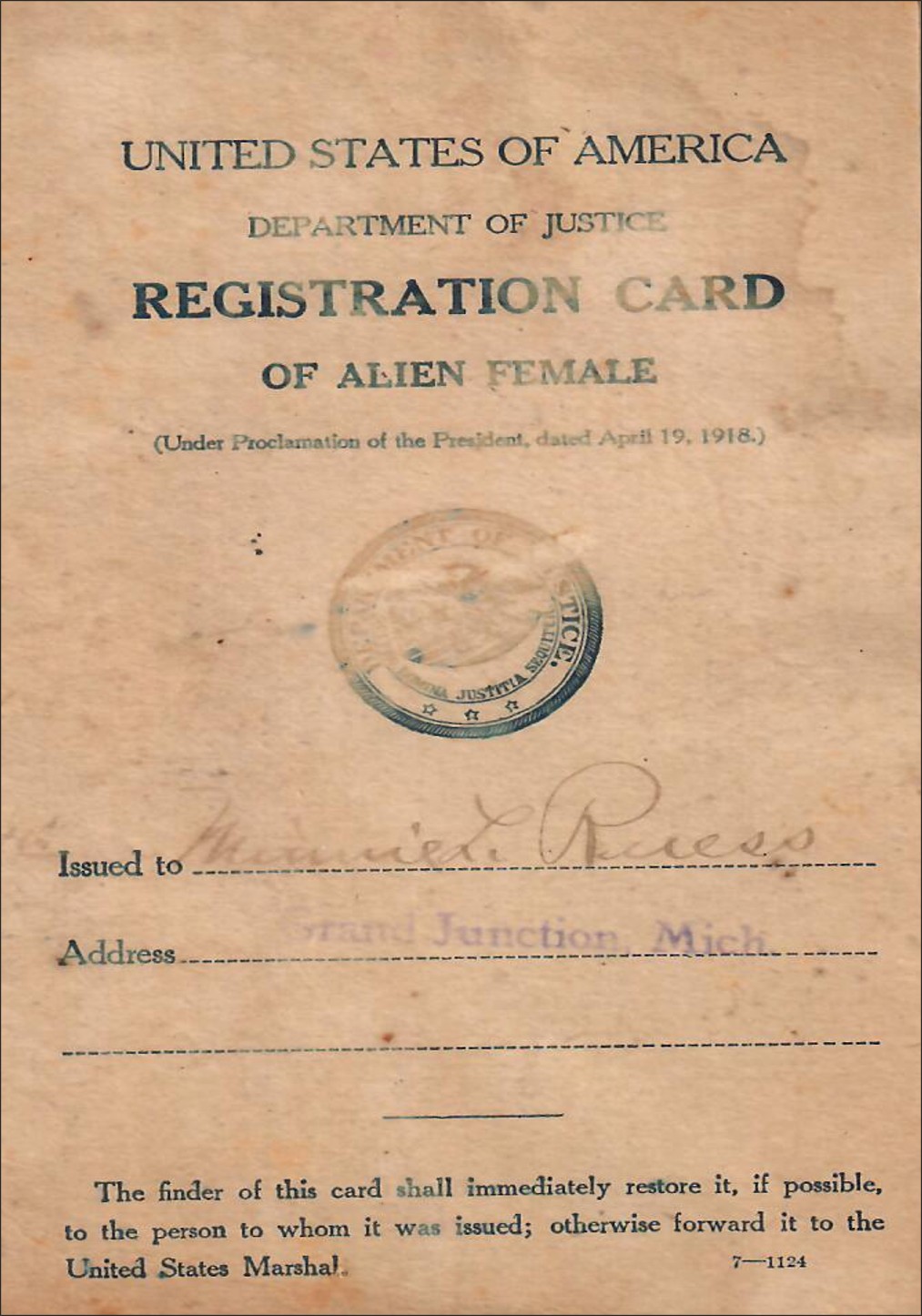
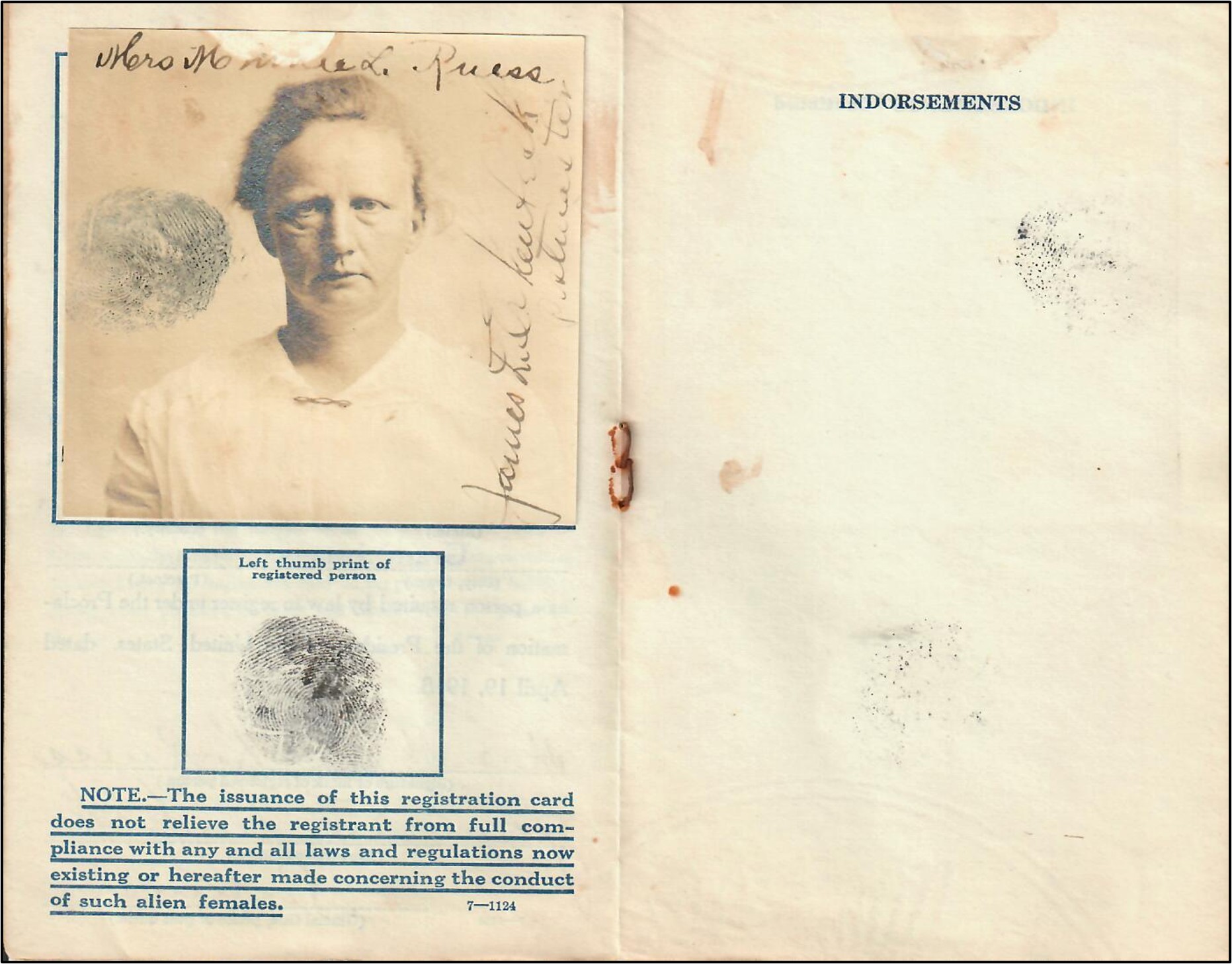
Example: A World War I Registration Card of Alien Female
United States Department of Justice registration card issued in Grand Junction, Michigan, under the President’s proclamation of April 19, 1918, which required women who were enemy aliens to register during the First World War.
The registrant, Wilhelmina (Ruess) Schallhorn (1863–1939), was born in Germany and died in Grand Junction, Michigan.
The card combines a printed government form, an embossed seal, handwritten entries, a photograph of the registrant and her left thumb print. Each of these features helps to authenticate the document and to tie it to one person at one place and time, which is the kind of evidence a historical appraisal depends on.
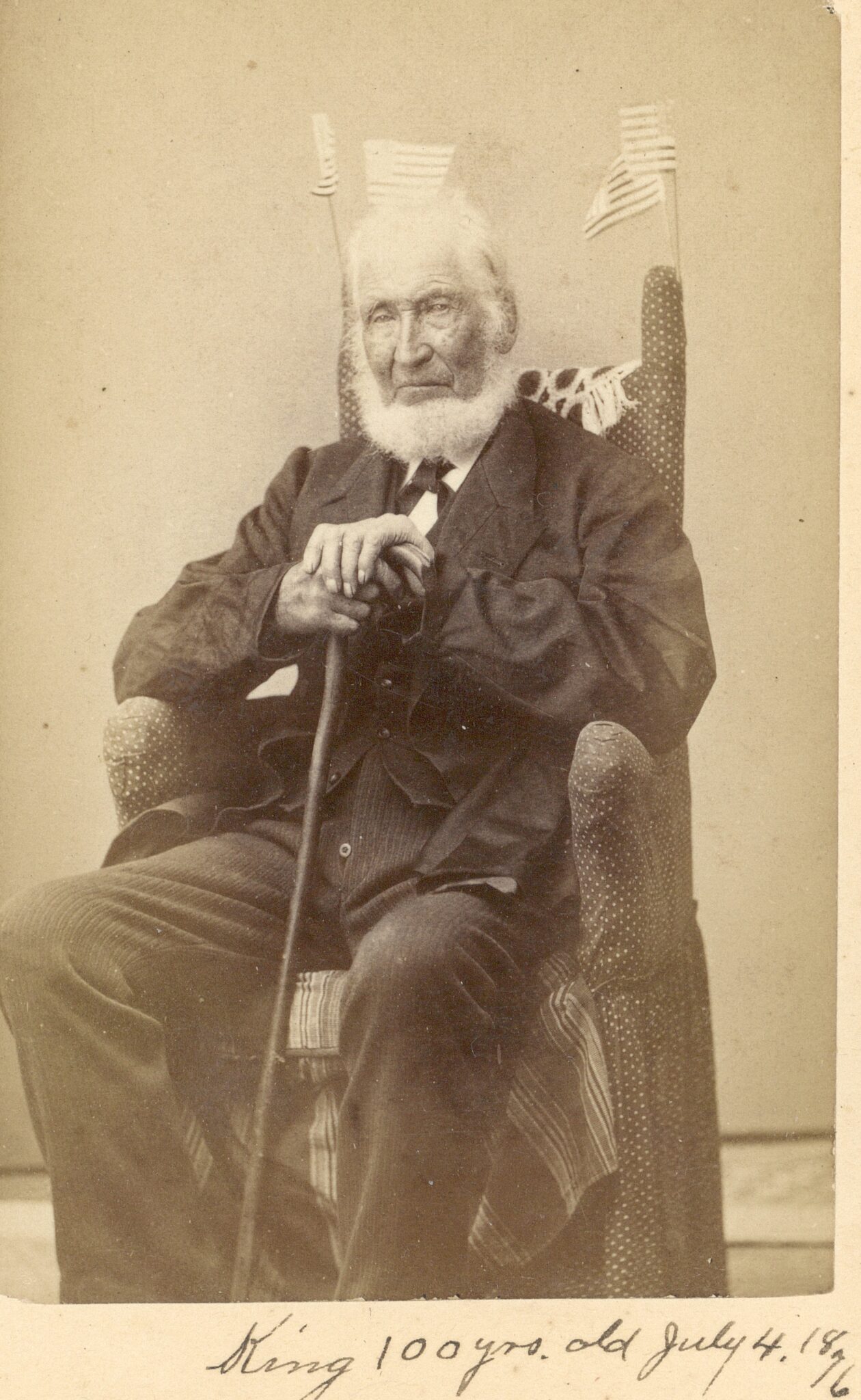
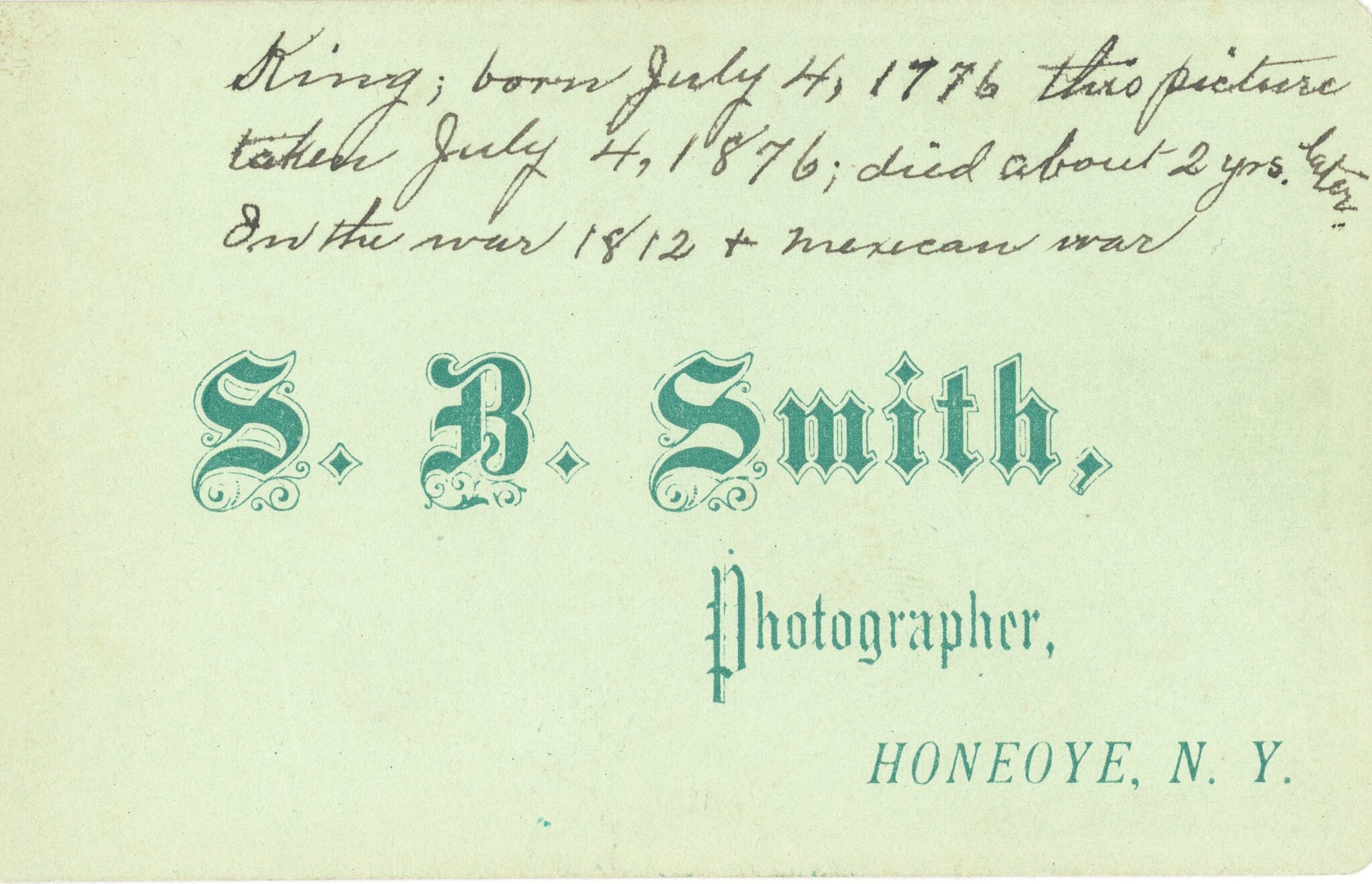
Example: A Carte de Visite of a War of 1812 Veteran
Carte de visite of Joseph King, photographed by S. B. Smith of Honeoye, New York, on July 4, 1876, which the inscription gives as his 100th birthday.
A period handwritten note on the reverse records his birth date and states that he served in the War of 1812 and the Mexican War. The photographer’s imprint and the inscription together supply a date, a place and a claim of service, each of which can be tested against other records.
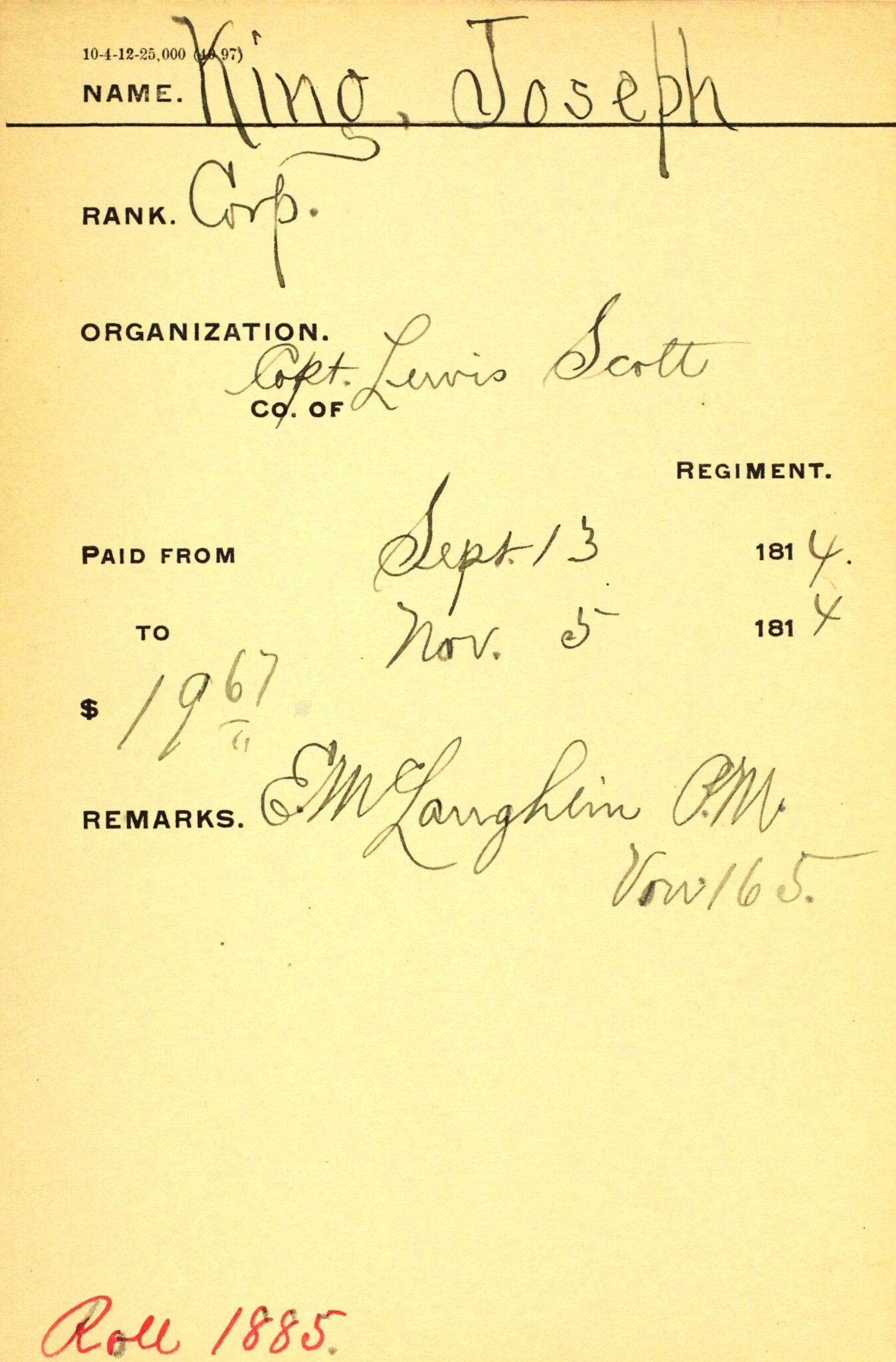
Example: Testing a Claim Against the Record
The inscription on the King carte de visite says he served in the War of 1812. An independent record can be used to test that claim. This payroll card lists Joseph King as a corporal in Captain Lewis Scott’s company, paid from September 13 to November 5, 1814.
Provenance research works this way: each mark, inscription and record is weighed against the others until an object or image is tied to a person, a place and a period of service. The documentation behind that conclusion is part of the appraisal.
Source: War of 1812 abstracts of payrolls for New York State militia (“payroll cards”), 1812–1814. Series B0810. New York (State). Adjutant General’s Office. New York State Archives, Albany, New York.
Standards and Training
My appraisals are prepared in accordance with the Uniform Standards of Professional Appraisal Practice (USPAP) and the American Society of Appraisers Code of Ethics. I have passed the ASA Principles of Appraisal Practice and Code of Ethics examination and the 15-Hour National USPAP Course examination, and I am completing the ASA personal property appraisal courses (PP201–PP204). All client information is held in strict confidence.
Request an Appraisal
To discuss an appraisal, please contact me. A brief description of the item or collection is helpful with your first message.
Email Michael